


Free Download Collaborative Helping: A Strengths Framework for Home-Based Services
So, it will not force your time to constantly invest the moment for this type of guide. Just couple of times in a day, as well as you can get exactly what the other viewers suppose. In this case, Collaborative Helping: A Strengths Framework For Home-Based Services is offered in soft data system. You can download and get the book from the web link connecting that is offered. It will not be made complex. You will certainly go easily to locate the book as well as start to review.
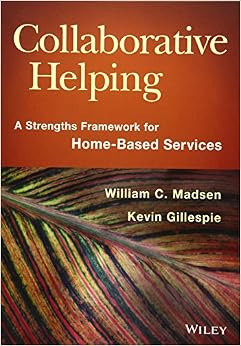
Collaborative Helping: A Strengths Framework for Home-Based Services

Free Download Collaborative Helping: A Strengths Framework for Home-Based Services
Come join us to locate your favourite book. If you feel hard as well as overwhelmed to get guide now, you could try Collaborative Helping: A Strengths Framework For Home-Based Services Thanks for visiting this brand-new coming publication, please. Yeah, why we additionally provide you to read this publication is likewise influenced by some factors. The variables are definitely suggested for reading this publication. When you have visited this internet site, you could find such link and also reach click it already.
The factor of why you could obtain and also get this Collaborative Helping: A Strengths Framework For Home-Based Services quicker is that this is the book in soft file type. You could read guides Collaborative Helping: A Strengths Framework For Home-Based Services anywhere you desire also you are in the bus, office, residence, and various other locations. But, you might not should relocate or bring the book Collaborative Helping: A Strengths Framework For Home-Based Services print wherever you go. So, you will not have bigger bag to bring. This is why your option making much better principle of reading Collaborative Helping: A Strengths Framework For Home-Based Services is really useful from this instance.
When discussing the completed advantages of this publication, you can take the review of this publication. Several reviews show that the viewers are so satisfied as well as surprised in Collaborative Helping: A Strengths Framework For Home-Based Services They will leave the good voices to elect that this is a great publication to review. When you are very interested of what they have actually reviewed, your turn is only by reading. Yeah, reading this publication will be not any issues. You can get this book quickly and read it in your only leisure.
Relieve of the language and easy jobs to understand become the reasons of many individuals attempt to obtain this publication. When you intend to discover even more regarding Collaborative Helping: A Strengths Framework For Home-Based Services, you could see who the author is, that the individual that has produced the book is. Those will certainly be a lot more fantastic. Therefore, you can check out the web page with the link that we offer in this write-up. It will not be so challenging for you. It will certainly be a lot easier to get.
Review
Praise for Collaborative Helping: A Strengths Framework for Home-Base Services "I really like how the authors point out that a strength-based approach does not have to be unnecessarily cliché. This is an important message to the field and cannot be stated enough. This book is great at showing how being strength-based can be real and useful to supporting change in people. Also it provides the reader with a clear understanding of why the collaborative helping approach is important and how to implement the approach. The vignettes and examples are excellent! I see this book as a teaching tool and I would use the book in a course geared for future helping professionals. It provides useful information that encourages helpers and the organizations in which they work to be more "people -centered". —Mario Hernandez, Ph.D., Professor and Chair, Department of Child and Family Studies, College of Behavioral and Community Sciences, University of South Florida "This book will be helpful for those who struggle with establishing, developing, planning, and motivating clients, as it offers many examples and solutions for helping those clients most difficult to reach and engage in the treatment process. Reading this book will enrich practice methods for many in the helping professions." —Richard J. Gabriel, LCSW, Manager BHS Social Work "The often polarized and fraught relationship of front line mental health and social service workers and the pained and troubled families with whom they work is at last replaced with one capable of generating hope, resiliencies and lasting change. Madsen's original Collaborative Therapy Model is vibrantly transformed here – a living tapestry weaving multiple complex theories in to an accessible practice shaped by the sheer humanity of care-givers and care-receivers in the most dire circumstances. From students and brand new human service workers to long experienced therapists, supervisors and program directors – all must read this book. Hold tight to the stories within – as they fill your head, your heart and your imagination, you will do more compassionate and effective work with those you meet next." —Evan Imber-Black, Ph.D., Professor and Program Director, Marriage and Family Therapy, Mercy College "Respect and regard for people served resonates throughout, and helpers reading this book will feel understood and encouraged. Influences from Narrative therapy, Wraparound, and Motivational Interviewing are intelligently integrated in the framework, guiding service providers, supervisors, and consultants to put connection, curiosity, and hope into practice. The text addresses sensitive issues, difficult dilemmas, complicated scenarios, and serious matters in pragmatic and empathic ways, showing "collaborative inquiry," "contact before content" and "connection before correction" in action." —Marisol Muñoz-Kiehne, Ph.D., Clinical Psychologist, Associate Director of Training at Marin County Mental Health and Substance Use Services, San Rafael, CA "Collaborative Helping provides a practical, principle-based approach for working alongside people in the community. Case managers and paraprofessionals who work in health, mental health, employment, and other organizations will benefit from reading and adopting both the collaborative, strength-based stance and the strategy for "mapping" client plans and goals as described in this book." —Benjamin M. Ogles, Dean and Professor of Psychology, Brigham Young University, Provo, UT "Madsen and Gillespie have drawn strategically from cutting edge material from family therapy, as well as community and organizational development, to promote collaborative ways of working with individuals and families. Tempered by their practice wisdom and management experience, the book includes a wide range of clinical strategies that can be applied immediately by new and very experienced practitioners. Their writing truly is grounded in a spirit of respect, connection, curiosity and hope." —Peter J. Pecora, Ph.D., Casey Family Programs and the University of Washington "Collaborative Helping is a major contribution to helping relationships of all kinds; personal and professional. Drawing on many years of experience as professional helpers, the authors offer a comprehensive set of practical and wise principles that?@inform the creation of collaborative, compassionate and empowering helping relationships in a way that is both useful and inspiring. I found this book to be immediately relevant and useful in my own work as a psychotherapist and supervisor and highly recommend to all who are interested in improving their capacity to help others." —Andrew Tatarsky, PhD, President, Division on Addiction, New York State Psychological Association; Director, The Center for Optimal Living "Rarely have I read a book that so clearly links theory to practice in such a useful way. Madsen and Gillespie have produced an insightful guide to how we can make Health and Human Services across a wide range of contexts more sympathetic to those who become part of complex systems. This is a book that not only provides excellent examples of how to share power and make people feel respected, avoiding the perils of blame and resistance that can cause worker burnout, it is also the story of how workers themselves find creative ways to become a positive part of their clients’ lives. Based on years of experience as a trainer and agency director, Madsen and Gillespie describe a hopeful, engaging model of practice that will help workers and their agencies respond in effective ways to families in crisis. It is a must read for every front line worker and agency supervisor." —Michael Ungar, Ph.D., Co-Director, Resilience Research Centre, Professor of Social Work, Dalhousie University "Collaborative Helping is a must read for all community-based workers in multi-stress social contexts. Prevalent intervention models, focused on reducing youth and family deficits, too often become problem-saturated and defeated by clients' overwhelming life challenges. In contrast, the authors’ strength-based family centered approach-- immediately practical and effective--breathes new hope, possibilities, and vision into their lives, encouraging their best efforts and mutual support toward their aspirations and positive growth." —Froma Walsh, PhD, Co-Founder & Co-Director, Chicago Center for Family Health; Mose & Sylvia Firestone Professor Emerita, The University of Chicago; Author, Strengthening Family Resilience
Read more
From the Back Cover
Praise for Collaborative Helping: A Strengths Framework for Home-Based Services “Collaborative Helping is a must read for all community-based workers in multi-stressed social contexts. Prevalent intervention models, focused on reducing youth and family deficits, too often become problemsaturated and defeated by clients’ overwhelming life challenges. In contrast, the authors’ strength-based family centered approach—immediately practical and effective—breathes new hope, possibilities, and vision into their lives, encouraging their best efforts and mutual support toward their aspirations and positive growth.” — Froma Walsh, PhD, Co-Founder & Co-Director, Chicago Center for Family Health; Mose & Sylvia Firestone Professor Emerita, The University of Chicago, Author, Strengthening Family Resilience “Collaborative Helping provides a practical, principle-based approach for working alongside people in the community. Case managers and paraprofessionals who work in health, mental health, employment, and other organizations will benefit from reading and adopting both the collaborative, strength-based stance and the strategy for ‘mapping’ client plans and goals as described in this book.” —Benjamin M. Ogles, Dean and Professor of Psychology, Brigham Young University, Provo, Utah “Rarely have I read a book that so clearly links theory to practice in such a useful way. This book is an insightful guide for making Health and Human Services more sympathetic to those who become part of complex systems. It offers a hopeful, engaging model of practice to help workers and their agencies respond effectively to families in crisis. It is a must read for every front-line worker and agency supervisor.” — Michael Ungar, PhD, Co-Director, Resilience Research Centre, Professor of Social Work, Dalhousie University This book is a guide that all helping professionals can use to navigate the complexities of home and community work by building collaborative relationships with clients and their families. Containing advice for working with individual clients and their families, it also provides strategies for dealing with reluctant and difficult clients using a strengths-based, client-centered perspective. Drawing from the authors’ 60 years of combined experience in the field and numerous interviews with frontline practitioners and people seeking help, this resource uses stories to introduce and illustrate core ideas and practices. The book offers a framework for helping professionals across many different contexts to assist clients to envision desired lives, address long-standing problems, and develop effective coping strategies in the context of their local communities. Collaborative Helping is a road map, for workers such as case managers, child welfare workers, home health care workers, residential workers, as well as those who train, educate, and supervise those workers. This sustainable, strengths-based model of collaborative helping is widely applicable, including integrated care environments as well as organizations using a recovery and client-centered approach.
Read more
See all Editorial Reviews
Product details
Paperback: 240 pages
Publisher: Wiley; 1 edition (April 7, 2014)
Language: English
ISBN-10: 9781118567630
ISBN-13: 978-1118567630
ASIN: 1118567633
Product Dimensions:
6.9 x 0.7 x 9.9 inches
Shipping Weight: 15.2 ounces (View shipping rates and policies)
Average Customer Review:
4.3 out of 5 stars
8 customer reviews
Amazon Best Sellers Rank:
#528,901 in Books (See Top 100 in Books)
Bill Madsen is one of those people whose ideas have had an instantaneous change on my practice from the moment I come into contact with them. Collaborative Helping builds upon the foundational ideas provided in Collaborative Therapy in a practical guide to re-imagining family vision and family voice in the therapeutic process. As a clinical supervisor, this is a book I want for all of my team to own and love. Madsen and Gillespie do a fantastic job joining family systems and post-structural theories with direct service application to home-based work in a manner that is both unusual of authors in general yet highly characteristic of the work of the Family Centered Services Project. These are the conversations that families say stick with them and provide the fuel for everlasting, family-directed change.
When I picked up this book, I'll admit that what I was really hoping was something I could have my staff read that helped them understand how to navigate the complicated dynamics of working with families in their homes, as opposed to the more traditional clinic settings. And this book does indeed have a chapter on that -- but just the one chapter. The vast bulk of the book is about collaborative helping maps -- the theory behind them, and how to use them in different settings. This can be a great toolset to have in working with vulnerable families, but it's far from the only strengths-based approach that is relevant. As a result, for me the book felt a bit repetitive in places, giving many examples of the same skill, rather than branching out more into other strength-based approaches.That said, if the concept of collaborative helping maps is new to you or your team, I think this could be a very valuable book. And truthfully, I think it's probably a helpful framework in many office-based settings as well, not just with home-based services. It is written at a very accessible and almost modular level, which would make it work well to parcel out and read together as a team. Myself, I'm going to have my staff read Chapter 7 for one of our staff training meetings, and keep this book on our shelves in case they want to learn more about the topic in general.
Collaborative help is, sometimes, a necessary challenge that demands a lot from all the parties involved - patient, relatives, friends and of course the professionals (and non-professionals too) involved in the care giving. If that is already a challenge in a hospital environment, the bar is set higher when it becomes home-based.The authors seems to be pouring years and years of their own, vast experience into this wonderful book that helps you understand (and make others understand) all the variables involved in a home-based service. So the book gives you most of the scenarios to be found and clearly breaks down to you all the things you need to consider in order to do your work in an efficient AND effective way.In that sense, this book seems to run the extra mile in order to leave no stone left unturned. Not being a professional - but with seniors in my family who live in that scenario - this book was a positive surprise, written by experienced people who really care.RECOMMENDED!
This book is a highly professional, caring, and comprehensive examination of the ways in which services can be provided for individuals in the home environment. Stated very simply, the central proposition here is that those who need services in the home are best-served by multiple helpers -- professionals and non-professionals -- who collaborate.However, providing such care is rarely simple and the book embraces these complexities. There's an admirable mix of the theoretical and the practical here. The book provides broad perspectives and then elegantly narrows in on specifics. This isn't a book of "case studies" per se, but the authors recognize the human dimension in this topic and provide many vignettes of home-based services -- involving both care-receivers and their families -- that I found quite illuminating.A great deal of attention is paid here to visualizing, devising, and managing a "map" of services. And a map such as this will, over time, change, and the authors discuss the importance of adapting care to changing situations.The entire tone adopted here -- both in the prose and in the ways in which services are provided -- is positive and life-affirming. So welcome!
As a former social worker, I know the maze one goes through to try to line up the services needed to help home-based clients. This book is well written, and written in a basic enough vocabulary that even the layman would find it extremely useful. The authors have done a great job explaining the need for collaborative care, and the decision making process behind it. It will help the healthcare provider explain the need for collaborative help to both the client and their family members. It's a fast read, and contains great information that will provide the basics for planning and executing collaborative care for either clients or family members. With the aging of the American population and home based care becoming more popular, it is a timely and useful tool.
The closest I've been to the people this book is written for was in Arizona where my parents were acting as foster parents and had contact with those in Child Protection Services. The book is a tremendous revelation to me and I was especially moved by many of the stories told of those who were in dire need of help and those whose vocation was to help them. Not only should every person in the field read this, it should be compulsory reading for college students preparing themselves for careers in social work.
Collaborative Helping: A Strengths Framework for Home-Based Services PDF
Collaborative Helping: A Strengths Framework for Home-Based Services EPub
Collaborative Helping: A Strengths Framework for Home-Based Services Doc
Collaborative Helping: A Strengths Framework for Home-Based Services iBooks
Collaborative Helping: A Strengths Framework for Home-Based Services rtf
Collaborative Helping: A Strengths Framework for Home-Based Services Mobipocket
Collaborative Helping: A Strengths Framework for Home-Based Services Kindle


0 komentar:
Posting Komentar