


PDF Download Nervous Conditions [Import]
Maintain your method to be right here and also read this web page completed. You can delight in looking the book Nervous Conditions [Import] that you really describe obtain. Below, getting the soft file of the book Nervous Conditions [Import] can be done effortlessly by downloading in the web link page that we provide right here. Certainly, the Nervous Conditions [Import] will certainly be your own sooner. It's no should await the book Nervous Conditions [Import] to get some days later after buying. It's no have to go outside under the warms at mid day to head to guide establishment.
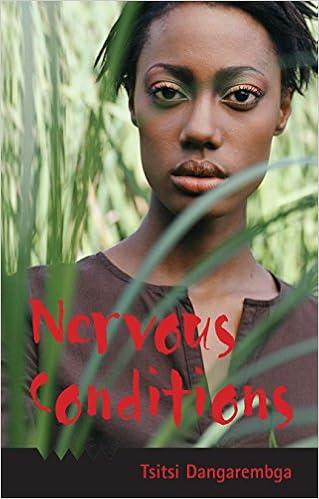
Nervous Conditions [Import]

PDF Download Nervous Conditions [Import]
This is it the book Nervous Conditions [Import] to be best seller just recently. We offer you the very best offer by obtaining the spectacular book Nervous Conditions [Import] in this site. This Nervous Conditions [Import] will certainly not just be the sort of book that is hard to find. In this web site, all types of publications are given. You could browse title by title, author by author, and also publisher by author to discover the most effective book Nervous Conditions [Import] that you can check out currently.
Currently, we come to provide you the appropriate brochures of book to open. Nervous Conditions [Import] is one of the literary work in this globe in appropriate to be reading product. That's not only this publication gives reference, but additionally it will certainly reveal you the impressive benefits of reviewing a book. Establishing your numerous minds is needed; in addition you are type of individuals with excellent curiosity. So, guide is extremely suitable for you.
Even there are numerous books to pick; you may feel so difficult to choose which one that is extremely ideal for you. Nonetheless, when you still feel confused, take the Nervous Conditions [Import] as your referral to review now. The soft documents will certainly worry about the exact same points with the print file. We provide this publication is just for you that intend to attempt reading. Also you have no analysis habit; it can be starter way to enjoy reading.
For even more interesting factor, you may not know regarding the web content of this book, may you? Why don't you attempt to understand? Recognizing new thing will certainly result in conceptualize the life much better. You may not only review as the activities, but analysis can be a way making your life run well. By this Nervous Conditions [Import] you can actually imagine just how the life will certainly be and need to be.
Review
Many good novels written by men have come out of Africa, but few by Black women. This is the novel we have been waiting for... it will become a classic. (Doris Lessing)Tsitsi Dangarembga -- Winner of the 1989 Commonwealth Writers' PrizeIt is the late 1960s and Tambu is a 13- year-old in rural Zimbabwe. “Although our squalor was brutal,†she says, “it was uncompromisingly ours.†Her brother Nhamo has been sent to the mission school in town, his education paid for by her uncle, the family elder. Tambu is thirsty for knowledge, and feels the injustice of being kept on the family homestead, but Nhamo tells her she’d be “better off with less thinking and more respect.†Tsitsi Dangarembga’s semi-autobiographical debut was first published in 1988, when it won a Commonwealth Writers prize. It has since become a staple on Eng Lit courses, and is now reissued with a scholarly introduction. A coming-of-age story, it ticks all the right boxes for student essayists―colonialism, gender, race―and provides a mine of information about Shona customs. Its appeal to lay readers lies with the guileless Tambu, who starts off as a rather prim little girl but turns into a perceptive and independent young woman. (The Guardian)Dangarembga raises issues about culture, conflict, displacement, family relationships, consciousness and emancipation in a postcolonial society. On another level, it illustrates what children raised between two cultures may have to contend with. Nervous Conditions will find an audience with young people (especially women) and those working in health, teaching and social work professions (Young Minds Magazine)
Read more
About the Author
Tsitsi Dangarembga was born and brought up in Zimbabwe. She studied medicine and psychology before turning to writing full-time and becoming the first Black woman in Zimbabwe to publish a novel in English. Nervous Conditions was the recipient of the 1989 Commonwealth Writers’ Prize for Fiction, the book has become a modern classic. Nervous Conditions was also chosen as one of the ‘Top Ten Books of Africa’s 100 Best Books of the 20th Century’ by a Pan African Initiative in 2002. Dangarembga’s sequel to Nervous Conditions entitled The Book of Not was published in 2006 by Ayebia. In addition, she has written a play entitled She No Longer Weeps. Having studied at the German Film and Television Academy, Dangarembga now also works as a scriptwriter, consultant and film director. She is the founder of International Images Film Festival for Women (IIFF). She is currently working on the third novel in the trilogy and lives in Zimbabwe.
Read more
Product details
Paperback: 224 pages
Publisher: Ayebia Clarke Publishing; 2 edition (December 19, 2004)
Language: English
ISBN-10: 0954702336
ISBN-13: 978-0954702335
Product Dimensions:
5 x 0.8 x 7.5 inches
Shipping Weight: 7 ounces (View shipping rates and policies)
Average Customer Review:
4.5 out of 5 stars
88 customer reviews
Amazon Best Sellers Rank:
#19,407 in Books (See Top 100 in Books)
An engaging (and fast) read. A must read for any one in the African diaspora experiencing some kind of change in social class (e.g. being first in the family to attend college or graduate school) or otherwise having suspicions about the sources of their feelings of alienation. Specifically, this is an amazingly relevant depiction of the pain experienced by those who do as they're told and pursue education to "better themselves": the richness of this book's characters show just how many costs go unstated by those who have the privilege of not paying said costs and unacknowledged by those who haven't had to go through the violent process of being harshly disciplined into being acceptable by the dominant segments of society.Nyasha's character resonated most with me: I, too, feel frustrated by what seems to be an obvious oppressive reality around me as well as the extreme deprivation that can encourage oppressed people to appear complicit. Additionally, most of the other characters also helped open my eyes to the ways that I have failed to understand why people with situations different from my own can seem complicit in their own subordination. The discussion of how gender plays out also may be eye-opening for those with little clarity on the violence that seeming innocuous hierarchies produce (e.g. even "good" people can enact said violence). I plan on reading the sequel, although I've heard it's not as good.I also recommend this book to:-Any person who doesn't understand the severity of the violence of colonization on those who have been colonized (e.g. people who aren't part of a colonized group, people who firmly believe today's racism is "less bad" than yesterday's)-Those who don't see why people in the African diaspora are often concerned with what often is written off as mere "identity politics" (as opposed to a legitimate sense of loss)-Any person who is having a hard time understanding how "nice" and "good" people are still among the hands that enact violence against colonized peoples-Any person who is having a hard time understanding how a "minority" can be among the hands that enact violence against (their own) colonized people (e.g. people who firmly believe in a rigid category of "sell-outs")
A voice screams out at you, The momentary embrace of the eyes in a far away camera glance. A dismissal of worth. The total subjugation and repression felt by women of the post-colonial world is not without its listeners. Titsi Dangerembga's "Nervous Conditions"(NC) is the story of a determined young girl who manuevers both patriarchal and Imperial obstacles to obtain an ambigous future. Offering an answer to the question of how a person who is "double colonized"(233pc) can break free from the restraints of both neo-colonial and cultural barriers NC never the less leaves for the reader the issues of western education and the judeo-catholic religion as unresolved mechanisms of future restraints in its character's lives." When Nervous Conditions was published in 1988, it added to the growing corpus of women's writing in Zimbabwe."(debunk1) Explaining the controlling theme of the novel Kwame Appiah writes in the introduction,"while not specifically addressed to a western readership, the problems of racial and gender equity the text raises are not in any way unfamiliar to us."(NCxi)Both Shani Mootoo's " Cereus Blooms at Midnight"(CBAM) published in 1996 and Arundhati Roy's "God of Small Things"(GOST) published in 1997 explore the theme of characters seeking to define themselves outside the traditional patterns of repression encountered universally by women in post-colonial society. This striking similiarity in the subject and themes of NC,CBAM and GOST makes for an interesting comparison. Ketu Katrak in an essay titled "Decolonizing Culture" warns against judgement,"One finds(1)little theoretical production of post colonial writers given the serious attention it deserves, or that it is dismissed as not theoretical enough by western standards; (2) the increasing phenomenon of using postcolonial texts as raw material for the theory producers and consumers of Western Academia; (3) theoretical production as an end in itself, confined to the consumption of other theorists who speak the same priveliged language in which obscurity is regularly mistaken for profundity. A near hedgemony is being established in contemporary theory that can with impunity ignore or exclude post-colonial writers essays, interviews and other cultural productions while endlessly discussing concepts of the 'other' of 'difference and so on" (239cr)It is with this warning against classification that a parallel can be drawn between the three novels and a unity of message defined in the texts.All three novels place Western education at the forefront of the story. By portraying abuse at the hands of the mimic-man (Bahbi) the contradiction between the value of western knowledge and the system of repression it represents is drawn. The patriarchal figure of Babamakura in NC is reconstituted in the figures of Chandin in CBAM and Papachi in GOST. Placing the mimic-man into a political context Frantz Fanon exhorts his "comrades" in the "Wretched of the Earth", "Let us not lose time in useless lament or sickening mimicry. Let us leave this Europe which never stops talking of man yet massacres him at every one of it's street corners, at every corner in the world."(WE235)By portraying characters that have broken away from societal norms and found happiness the authors of CBAM and GOST confirm the possibility of an alternative to the cycle of female oppression that NC challenges but does not defeat. Vivian May describes CBAM's interpretation of transcendence by it's characters as,"an alternative epistemology and economy of being that rely upon notions of love and desire which do not uphold the dysfunctional family of empire"(dislocate) By choosing a lifestyle that is outside of the normal structure of social roles for its protagonists Mootoo and Roy have offered an alternative to Dangarembga's vision for hers. In NC Tambudzai explains herself when she says," I was not sorry when my brother died. Nor am I apologising for my callousness, as you may define it, my lack of feeling."(NC1) With this apology Tambudzai includes the readers in the story emphasising the importance of the subject. Tambudzai goes on to say,"my story is not after all about death, but about my escape and Lucia's: about my mother's and Maiguru's entrapment and about Nyasha's rebellion."(NC1) NC's portrayal of the hoplessness of Tambudzai's mother and her aunt Maiguru are contrasted against the achievements of Tambudzai and Lucia but also tempered by the agony of Nyasha. CBAM also offers its interpretation of how a person can break free from the opression of cultural norms. Mr Tyler, an effeminate man, finds freedom by working in a field where he is the only male, he says,"I was, after all, the only Lantanacamaran man ever to train in the field of nursing."(CBAM6) Being a male in a female dominated career Mr Tyler becomes a symbol for female repression as he struggles to understand his place in society. Otoh, Mr.Tyler's friend and love interest also has found a place outside of the traditional Patriarchal and Imperial confinements of the story. Describing Otoh's change from woman to man Mootoo writes,"The transformation was flawless. Hours of mind-dulling exercises streamlined Ambrosia into an angular, hard-bodied creature and tampered with the flow of whatever hormonal juices defined him."(CBAM110) Alternately in GOST, the twins, Rahel and Estha also offer an idea of how to overcome entrenched societal strictures. Describing Estha's reaction on being reunited with his twin sister Roy writes,"It had been quiet in Estha's head until Rahel came."(GOST16) Explaining the space occupied by Rahel in society Roy comments,"Rahel grew up without a brief...Without anybody who would pay her dowry and therefore without an obligatory husband looming on her horizon."(GOST18) Freed from the patterns of Patriarchal repression Rahel and Estha live outside of the dominant culture,"So as long as she wasnt noisy about it, she remained free to make her own inquiries:...Into life and how it ought to be lived."(GOST18)In answering the ambiguous ending to Dangarembga's NC Mootoo and Roy have employed the technique of "Magic-Realism" to offer an alternative narrative to overcoming the repression of "double colonization".Vivian May explains the use of supernatural events among post-colonial writers,"They see an imaginary space as offering opportunities to remember identities and histories differently."(dislocate) Using magical and unreal events CBAM and GOST allow the reader to imagine a different reality, one that transcends normality and gives the reader the confidence to embrace a future that is optomistic and hopeful. Bahbi in his forward to "The Wretched of the Earth" says of the idea of using fantastical imagery and situations,"It is Fanon's great contribution to our understanding of ethical judgement and political experience to insistently frame his reflections on violence, de-colonization, national consciousness, and humanism in terms of the psycho-affective realm--the body, dreams, psychic inversions and displacement , phantasmatic political identifications."(WExix) Answering NC with the use of psycho-affectivity both CBAM and GOST draw from the teachings of Fanon in an attempt at,"an engagement with(or resistance to) a given reality..."(WExix)Foremost of the themes of psycho-affectivity and magic realism used in CBAM is the setting of the story on the mythical island of Lantanamacara. By setting the story in a place that is not part of the known reality of the reader Mootoo provides the necessary backdrop for an escape from the accepted patterns of repression and control. Another more subtle note of magic realism occurs in the character of Otto. Born as a woman but living life as a man, his feminine qualities are supressed along with the memory of the community of his early years of life as a female."So flawless was the transformation that even the nurse and doctor who attended the birth, on seeing him later, marvelled at their carelessness in having declared him a girl.(CBAM110) The inability of the people of Lantanamacara to remember that Otoh had originally been a female is one of several premises that would be hard to accept outside of a world colored by psycho-affectivity.GOST also offers its own magic realism in the setting of the abandoned home of Kari Saipu. Populated by the ghost of a white man who has "gone native" Roy compares the ghost to William Conrad's Kurtz in "The Heart of Darkness". Later the house becomes the reason for the death of Sophie Mol in her attempt to cross the river as well as the scene of Velutha's savage beating at the hands of the police. Explaining the place of the house in the story Roy writes,"Nobody went to Kari Saipu's house anymore. Vellya Paapen claimed to be the last human being to set eyes on it. He asaid that it was haunted. He had told the twins the story of his encounter with Kari Saipu's ghost."(GOS189) Including the supernatural within the story GOST also engages the reader to think beyond the known and consider situations and outcomes outside of the normal human experience.Answering the questions left by NC, CBAM and GOST offer an avenue of understanding to how women can break free from oppression. Using the themes of magic realism, gender variance and love without restrictions Mootoo and Roy have provided an alternate vision to the issues brooched by NC. By depicting characters of ambigous sexual orientation Mootoo enlarges the scope of oppression by voicing the concerns of those outside of traditional sexual relationships. Roy, in her investigation into the "Love Laws" comments that they control,"Who should be loved, and how. And how much."(GOST33) Offering another interpretation of how women are repressed in the control of their ability to love, GOST answers to NC with an additional aspect of female repression. Apparent in both the novel CBAM and GOST is the portrayal of relationships that are anathema to the judeo-christian tradition. Characters who have chosen relationships in direct opposition to religious dogma and found happiness is a direct refutation of a third oppressive structure that is unaddressed in NC.
This beautifully written novel tells the story of four women in 1960s Rhodesia, told by a 14-year old girl from a very poor family who goes to live with her wealthy and educated uncle, aunt and cousin-sister. It depicts the hardships of growing up as a girl and woman at this time and place, for herself, her cousin, her mother and her aunt, and the restrictions and oppressions they face by the men in their family and society.
Nervous Conditions [Import] PDF
Nervous Conditions [Import] EPub
Nervous Conditions [Import] Doc
Nervous Conditions [Import] iBooks
Nervous Conditions [Import] rtf
Nervous Conditions [Import] Mobipocket
Nervous Conditions [Import] Kindle


0 komentar:
Posting Komentar